


Materiality Assessment
Material Sustainability
both within and outside the organization. In 2025, the company reviewed the identification and evaluate material sustainability topics
related to the Company's business operations. This assessment was used to analyze the impacts on the environment, society, human rights, and corporate governance (ESG). The material topics were selected based on the needs and expectations of all stakeholder groups of the Company, along with important issues that affect the Company's operations in the context of sustainability, risk factors, and global trends that may impact or provide opportunities for the business, following the Double Materiality principle. The Company collected and prioritized important sustainability issues with reference to the Global Reporting Initiative (GRI) Standards 2021 framework.
Assessment of Material Sustainability Topics
The material sustainability topics of Thantawan Industry are assessed by prioritizing them based on international standards referenced from the Global Reporting Initiative (GRI Standards 2021) and AA1000 Account Ability Principles (AA1000AP).
The assessment considers the significance to the Company and the importance to all stakeholder groups, covering both positive and negative impacts from the Company's operations throughout the value chain in the dimensions of Environmental, Social, and Governance (ESG). The assessment also integrates human rights risks into the consideration of all aspects.
Internal Factors
- Goals and direction of the organization
- Business plans of the organization
- Operational policies of the organization
- Risks that may impact the organization's sustainability (ESG) in both the short and long term
- Results of employee engagement surveys and feedback

External Factors
- Review of sustainability trends and directions
- Potential risks at both national and international levels
- United Nations Sustainable Development Goals (SDGs)
- Relevant laws, regulations, and requirements
- Needs and expectations of stakeholders that may have both positive and negative ESG impacts

Selection of Material Sustainability Topics
The process of selecting important issues from the needs and expectations of all stakeholder groups and other information, along with important issues that impact the Company, is as follows:

Identification of Material Topics
The Company has collected important data and analyzed internal and external factors that are consistent with the organization's business operations. Various data sources are considered to ensure that important issues and new risk factors are not overlooked. The organization selects relevant issues and identifies them as sustainability topics for Thantawan Industry through the following process:
- Identify Key Stakeholders
- Determine sustainability issues by reviewing sustainability topics according to GRI Standards, the Sustainability Accounting Standards Board (SASB), industry trend analysis, and relevant stakeholder groups.

Prioritization and Impact Evaluation
The data from the identification of material sustainability topics that are significant to the Company and stakeholders are grouped, evaluated, and prioritized according to the Double Materiality assessment framework, following the guidelines of GRI Standards. In addition, sustainability experts also provide opinions on the prioritization of the Company's sustainability issues to ensure that the Company's sustainability topics are comprehensive, accurate, and reasonable. The impact assessment consists of:
- Outside-In: Assessing the impact of sustainability issues from external factors on Thantawan Industry.
- Inside-Out: Assessing the impact of Thantawan Industry's operations in terms of environmental, social, and governance dimensions through stakeholder assessments.

Validation
The material sustainability topics obtained from the assessment and prioritization must go through a management evaluation to align with stakeholder perspectives and be approved by senior management to validate the completeness of the Company's material topics.

Disclosure
Reporting on the management approach and performance of material sustainability topics in accordance with the GRI Standards 2021 sustainability disclosure guidelines.

Continuous Improvement
Thantawan Industry continuously reviews the Company's material sustainability topics by incorporating perspectives and recommendations as guidelines for practices that are consistent with sustainability operations appropriate to the business and the needs and expectations of all stakeholder groups.
Prioritization of Material Sustainability Topics in year 2025
From the review of the process for determining material sustainability topics of Thantawan Industry, there are a total of 24 material topics covering economic and governance, social and human rights, and environmental aspects. In year 2025, Thantawan Industry has a total of 16 significant material sustainability topics as follows:
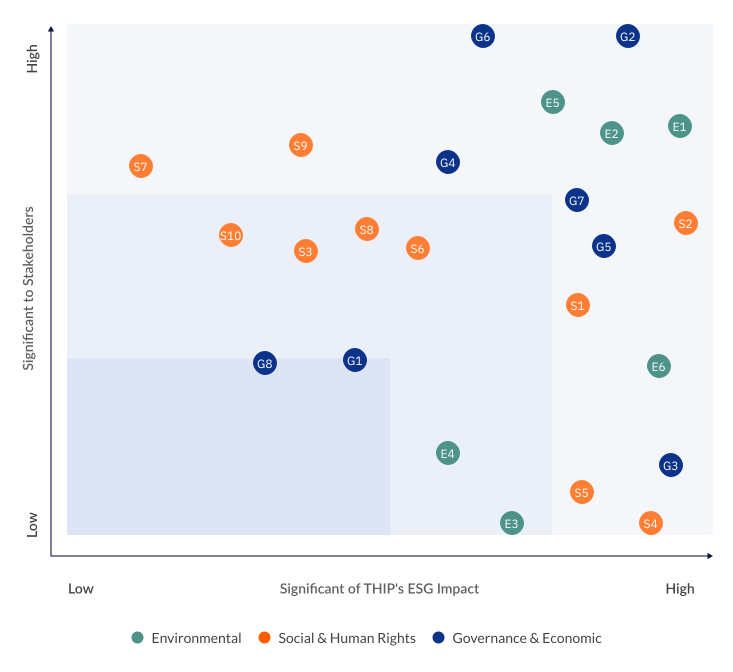
The review of the process for determining material sustainability topics in 2025 resulted in the following materiality matrix :
Environmental
-
E1Greenhouse gas management
-
E2Waste management
-
E3Energy management
-
E4Biodiversity conservation
-
E5Eco-products and low carbon
-
E6Circular economy
Social & Human Rights
Governance & Economic
-
G1Conducting business with integrity, fairness, transparency, and auditability
-
G2Customer relationship management
-
G3Overseas market Development
-
G4Anti-competitive behavior
-
G5Product safety
-
G6Product development and innovation
-
G7Supply chain management
-
G8Economic performance
